
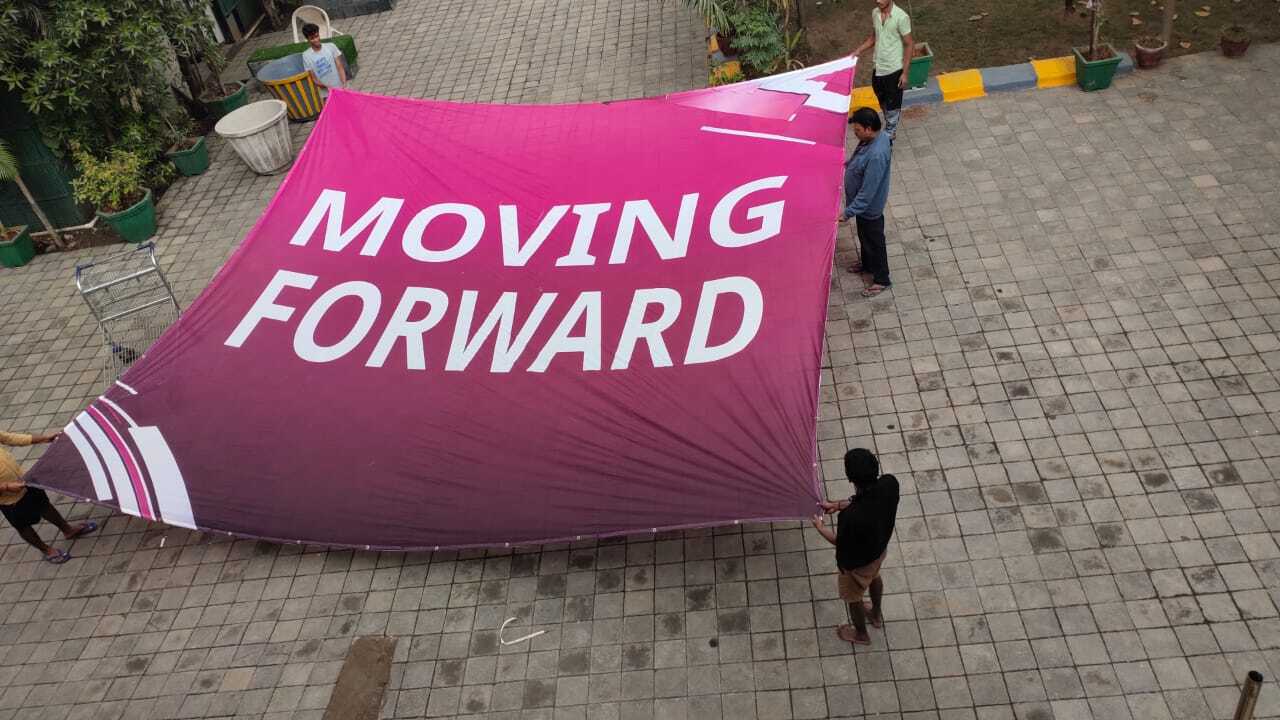
A business decides to install a large outdoor banner. The design is ready. The location is chosen. But before anything appears on a wall or fence, manufacturing begins. In the printing field, the creation of reinforced banner structures is handled through a process known as tentu gamyba, where raw material becomes a functional outdoor display.
It is less about decoration and more about construction.
Why Manufacturing Matters More Than Design Alone
Design attracts attention. Manufacturing keeps the banner intact.
Outdoor installations face:
- Wind pressure
- Sun exposure
- Temperature shifts
- Surface tension stress
Without proper structural preparation, even strong graphics fail quickly.
That is why production planning comes before printing speed.
Material Selection Shapes Performance
The environment usually determines the material, not preference.
PVC Based Fabric
PVC coated material provides solid surface strength and supports detailed graphic output. It works well for wall mounted or fenced installations with moderate exposure.
Mesh Structured Material
Mesh reduces wind load through small perforations. It is often selected for elevated or open installations where airflow is constant.
Thickness, flexibility, and coating all influence lifespan. Some projects demand heavier material. Others do not.
It depends on placement.

The Production Process From Start to Finish
Only after understanding the environment does printing begin.
- Project measurement verification
- File scaling and resolution control
- Color calibration for large format output
- Digital printing using industrial equipment
- Ink curing or drying stage
- Edge finishing and inspection
Large surfaces exaggerate minor file errors. Pixelation or color shifts become visible quickly.
Careful preparation reduces that risk.
Quality Control at Multiple Stages
Quality control is not a final step. It runs throughout production.
It includes:
- Monitoring ink consistency
- Inspecting surface uniformity
- Testing reinforcement strength
- Checking finishing alignment
Skipping inspection may save minutes. But it can cost durability.
Consistency protects long term performance.
Adaptation for Different Business Needs
Not every banner project looks the same.
Manufacturing adjustments can involve:
- Custom dimensions
- Extra reinforcement for heavy wind zones
- Additional eyelets for stronger tension
- Thicker material for long term exposure
Some companies prioritize longevity. Others prioritize lightweight flexibility.
There is no universal template for production.
Environmental Responsibility in Modern Production
Large format manufacturing has gradually adopted more responsible methods.
Eco solvent technologies reduce emissions compared to older solvent systems.
Material optimization reduces waste during cutting and layout.
Sustainability is not always the first question clients ask. But it increasingly influences decisions inside production facilities.
Frequently Asked Questions
Is banner manufacturing different from standard printing?
Yes. It involves structural reinforcement and environmental durability planning beyond simple ink application.
Can banners be customized in size and finishing?
Yes. Production systems allow flexible dimensions and reinforcement options.
Does material choice affect lifespan significantly?
Very much. Incorrect material selection reduces durability under outdoor stress.
Within professional printing environments, the responsibility of creating reinforced banner systems falls under tentu gamyba, where production accuracy defines final performance.